












On the afternoon of November 19th, the National Assembly continued its 10th session agenda, discussing two key legislative proposals: the amended Tax Administration Law and the amended Personal Income Tax Law.
A focal point of the debate was the proposed annual revenue threshold of VND 200 million for determining tax liability among business households. This issue garnered significant attention from delegates.
Addressing this, Minister of Finance Nguyễn Văn Thắng clarified that the fundamental tax calculation method remains unchanged. Previously, a lump-sum tax system allowed self-declared revenue estimates, whereas the current system mandates revenue declaration. This shift to declaration-based taxation significantly reduces losses, particularly in economically advanced regions.
Regarding tax collection, the Minister emphasized the current policy’s advantages: “Previously, businesses with annual revenues of VND 100 million were taxed. Now, the threshold is raised to VND 200 million, dispelling any notion of increased burdens on business households.”
However, he acknowledged delegates’ concerns about ensuring fairness among taxpayers. This amendment aims to establish a reasonable balance between business households and salaried employees.
“We fully acknowledge these concerns and will conduct further research to determine an appropriate tax threshold for business households, ensuring it reflects their actual operations and promotes fairness across taxpayer groups,” the Minister affirmed.
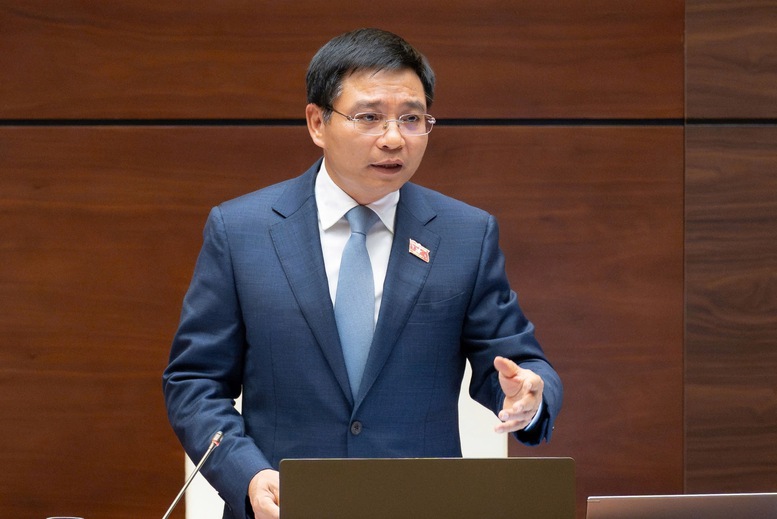
Minister of Finance Nguyễn Văn Thắng clarifies delegates’ inquiries during the National Assembly session. (Photo: Government News)
Earlier, on November 4th, 2025, the Government submitted the amended Personal Income Tax Law to the National Assembly. This amendment proposes comprehensive revisions to all 35 articles of the existing law, slated to replace the current legislation.
The draft law suggests an annual tax-exempt revenue threshold of VND 200 million for business households.
For households with annual revenues between VND 200 million and VND 3 billion, taxes are directly levied on revenue based on industry-specific rates: 0.5% for distribution and supply; 2% for services and construction (excluding material procurement); 5% for property rental, insurance/lottery agencies, and multi-level marketing; 1.5% for production, transportation, and material-inclusive construction; 5% for digital content services (entertainment, gaming, digital media, advertising); and 1% for other business activities.
Households with annual revenues exceeding VND 3 billion are subject to a 17% personal income tax on total profits.
Eliminating Lump-Sum Tax: Business Households Grapple with Input Invoice Declaration

As of January 1, 2026, the lump-sum tax will be officially abolished, requiring business households to declare taxes or transition to a corporate model. The Hanoi Tax Department has provided detailed guidance addressing key concerns, including input invoice declarations and inventory management, even for goods purchased from individuals.
Proposing a 0.1% VAT Rebate as a Consumer Incentive

The draft Law on Tax Administration (amended) is set to be discussed and considered for approval by the National Assembly during its 10th session.
Deputy Tax Director: Setting a Tax Exemption Threshold at VND 200 Million or Below Would Exempt 44% of Businesses

Tax authorities have pledged to streamline administrative procedures and reduce compliance costs by approximately 45%, emphasizing their commitment to easing the burden on taxpayers.
“Deputy Director of the Tax Department: The More Transparent and Open Businesses Are, the Less Likely They Are to Face Administrative Violations”

Mr. Mai Sơn, Deputy Director of the Tax Department, emphasizes: “The more transparent and compliant business households are, the less likely they are to face administrative violations. With proper collaboration with tax authorities, those who adhere to regulations will not be subject to inspections. In practice, audits are only conducted when there is a perceived risk.”
MPs Warn: 1-5% Revenue Tax Could Wipe Out Profits for Small Businesses

According to a member of the National Assembly, the tax threshold of 200 million VND in annual revenue for individual and household businesses is unfair. After deducting expenses and personal income, the remaining amount from 200 million VND in revenue “would barely be anything.”