The National Assembly Chairman has signed and issued Resolution 244/2025 on the Socio-Economic Development Plan for 2026.
The resolution sets forth 15 key targets, notably aiming for a gross domestic product (GDP) growth rate of 10% or higher; achieving a GDP per capita of USD 5,400 – 5,500; increasing the share of manufacturing and processing industries in GDP to approximately 24.96%; and maintaining an average consumer price index (CPI) growth rate of around 4.5%…
To achieve these targets, the National Assembly urges the Government and relevant agencies to effectively implement 11 key tasks and solutions.
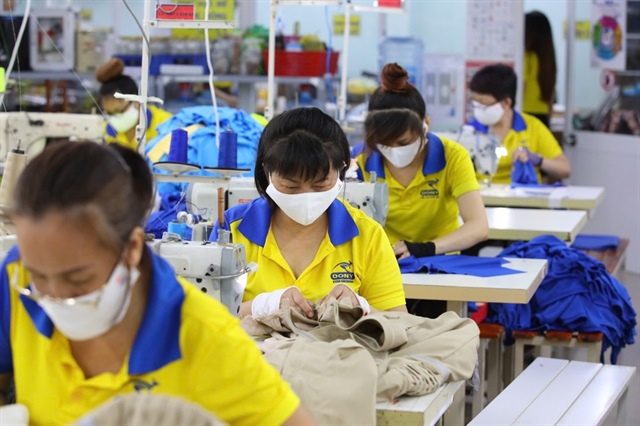
The National Assembly’s resolution outlines 15 key targets, including a GDP growth rate of 10% or higher. Photo: NGUYỆT NHI |
Institutional Reform as a National Competitive Advantage
The National Assembly emphasizes prioritizing growth while maintaining macroeconomic stability, controlling inflation, and ensuring balanced public debt and budget deficits within prescribed limits.
Additionally, interest rates and exchange rates should be managed in line with macroeconomic conditions and targets, ensuring reasonable capital access for the economy. Credit should be directed toward production, prioritized sectors, and growth drivers, while risky areas are monitored. Effective regulation of gold, real estate, and securities markets is also crucial.
The Assembly calls for comprehensive institutional and legal reforms, focusing on investment and business laws to unleash productivity, mobilize resources, and create new development momentum. The resolution stresses, “Institutional reform must be the ‘breakthrough of breakthroughs’ and a national competitive advantage.”
Proactive policy development is needed, especially controlled pilot mechanisms for new economic models and digital businesses. Legal frameworks should address emerging issues like artificial intelligence, digital transformation, green growth, and data resource utilization.
Efforts will continue to develop special economic zones in Vân Đồn, Vân Phong, Phú Quốc, free trade zones, and international financial centers in Vietnam.
Critically, by 2026, the Assembly mandates a 100% reduction of unnecessary or conflicting business conditions, abolishing all conditions not listed in the Law on Investment. Administrative procedures will be cut by 50% in time and cost compared to 2024.
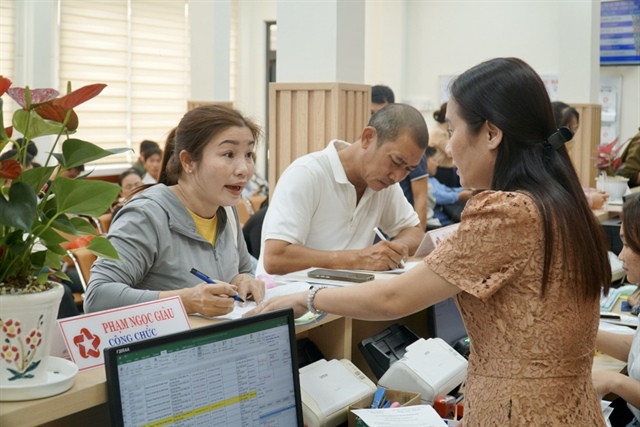
In 2026, a key task is evaluating civil servants based on Key Performance Indicators (KPIs). Photo: BẢO PHƯƠNG |
State-Led Economy with Private Sector as a Key Driver
Another critical task is optimizing the administrative apparatus, enhancing management to support development, and addressing challenges in resources, digital transformation, and data systems.
Maximum decentralization is required, linking resource allocation with accountability. Breakthrough solutions will strengthen strategic planning, particularly among central ministries’ staff, to meet new phase demands.
The Assembly emphasizes performance-based civil servant evaluations (KPIs), attracting top talent, and enforcing administrative discipline to eliminate responsibility avoidance.
A new growth model is envisioned, driven by science, technology, innovation, and digitalization, to restructure the economy and advance industrialization.
The state economy will lead, ensuring macroeconomic stability, while the private sector is recognized as a vital growth engine. Selective FDI projects focusing on technology transfer will be prioritized, alongside enhanced economic sector connectivity.
Efforts will resolve long-stalled projects and establish international financial centers in Ho Chi Minh City, Da Nang, and new-generation free trade zones.
Infrastructure projects include accelerating the Lao Cai – Hanoi – Haiphong railway, urban railways in Hanoi and Ho Chi Minh City, and designing high-speed North-South rail segments.
Phase 2 of Long Thanh International Airport and Gia Binh Airport construction will proceed, along with Can Gio International Transshipment Port, Hon Khoai Port, and other key maritime projects.
Energy infrastructure will meet growth needs, with progress on the National Power Development Plan (PDP8) and Ninh Thuan nuclear power projects.
|
Developing major reservoirs in the Central Highlands and Mekong Delta… The Assembly also stresses climate adaptation, disaster management, and environmental protection. Accelerated land data digitization will support real estate transactions. Air quality improvement plans for Hanoi and Ho Chi Minh City will be implemented, alongside vehicle emission standard updates. River pollution control will integrate with green, modern urban development. Enhanced disaster forecasting and response will minimize climate change impacts, with focused programs for the Mekong Delta and Northern Midlands. Major reservoir projects are planned for the Central Highlands, South Central Coast, and Mekong Delta to bolster water resource management. |
NGUYỄN THẢO
– 13:38 29/11/2025
Delegate Nguyen Tam Hung: Businesses Forced to Wait Months for Planning Approvals

According to a member of the National Assembly, the process of planning, evaluating, and approving development plans is currently prolonged, involving multiple rounds of feedback, assessments, and approvals.
Hanoi Sets Ambitious 11% Growth Target for 2026
On November 26th, the Hanoi People’s Council, term 2021-2026, convened its 28th regular session.
Unprecedented Budget Surplus: Hanoi Records Highest Revenue Collection in History

The Hanoi People’s Committee has announced that the city’s budget revenue for this year is estimated to exceed 640 trillion VND, reaching 124.9% of the planned target. Notably, revenue from land use fees alone accounts for 89 trillion VND. This marks the first time Hanoi’s budget collection has surpassed the 600 trillion VND milestone.
Direct Routes to Long Thanh Airport Accelerate Towards Completion
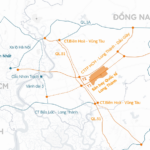
Among these routes, the upgrade project of Ton Duc Thang Road (25B), spanning from the center of Nhon Trach Commune to National Highway 51, is slated for technical completion by late 2025. Its primary objective is to establish a seamless transportation link between Long Thanh Airport and Ho Chi Minh City.
Vietnam Poised to Witness a Historic Milestone: Nearly 1 Million Trillion VND in Just Over 20 Days
This exclusive Vietnamese event will be broadcasted and connected to multiple locations nationwide.