For the founder and executive chairman, Do Quang Hien, venturing into clean energy isn’t merely about securing projects for profit. It’s a deeper ambition to create sustainable value for society, the community, and the nation.
Recently, General Secretary To Lam, his spouse, and a high-ranking Vietnamese delegation visited Laos for a state-level visit. They attended the 50th National Day celebration of the Lao People’s Democratic Republic and co-chaired a high-level meeting between the Communist Party of Vietnam and the Lao People’s Revolutionary Party.
During these discussions, the General Secretary emphasized elevating the relationship between the two nations from cooperation to a strategic partnership. This involves mutual support in resources, energy, and developmental space. Specifically, regarding energy, he stated, “Laos’ electricity and renewable energy can be integrated into the regional grid via Vietnam.”
This statement sets a new expectation for Vietnamese enterprises: to actively lead and engage in the region’s strategic energy infrastructure.
Taking the Lead in International Energy Arenas
In reality, several Vietnamese companies have already invested in cross-border energy projects over the years. In Laos, bilateral energy cooperation is seen as highly promising. Many of Vietnam’s large-scale projects are nearing completion.
Notable is the Truong Son Wind Power Plant by Viet Lao Investment and Energy JSC. With a capacity of 600MW, once operational, it will supply additional electricity to Vietnam during peak demand, reducing the risk of power shortages in northern provinces.
Another project attracting expert attention is the Savan 1 Wind Power Plant by T&T Group. After securing the concession contract in January 2025, the company swiftly completed a 50km, 220kV transmission line connecting Savannakhet to Vietnam within six months. This line is pivotal in connecting Laos’ renewable energy to the regional grid via Vietnam, as recently emphasized by General Secretary To Lam.
Significantly, the project, with a total capacity of 495MW and an investment of $768 million, is set to begin commercial operations by year-end, bringing clean electricity to Vietnam. Experts highly regard this project for diversifying supply, promoting green energy, and enhancing national energy security. It also fulfills high-level commitments between the two governments, strengthening the traditional friendship and cooperation between Vietnam and Laos.
Broader still, the journeys of the Truong Son and Savan 1 wind power projects symbolize more than energy investment. They represent the private sector’s commitment to building a sustainable energy future alongside the nation.
Nearly Two Decades of Foundation Building
Returning to T&T Group’s case, its energy sector wasn’t highlighted until Savan 1’s remarkable achievements in Laos. Amid the global shift toward renewable energy, T&T, under Do Quang Hien’s leadership, has long been preparing for this transition.
In a rare 2021 interview, Hien shared that 15 years ago, he began contemplating Vietnam’s energy future: “Since T&T’s founding, I’ve participated in numerous forums and conferences, engaging with international experts and organizations. These interactions led me to question why nations similar to Vietnam have advanced in agriculture, industry, and environment.”
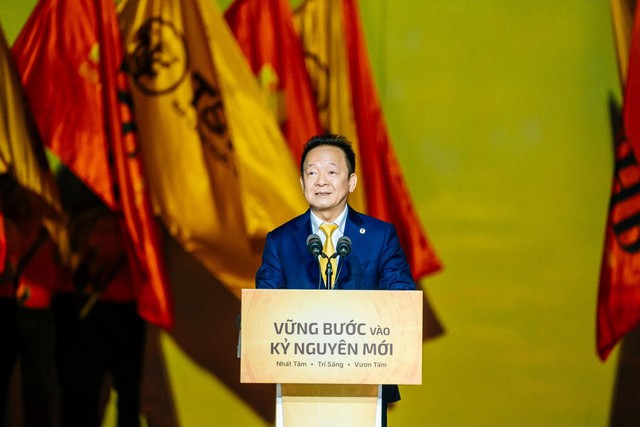
Nearly two decades ago, T&T Group prepared resources and mindset for the renewable energy arena.
Regarding energy, Hien foresaw Vietnam’s shift from hydropower and coal to renewables, a transition most developed nations have made. “I believed Vietnam would follow this trend,” he said.
Beyond ideas, the 1962-born entrepreneur prepared strategically for this “inevitable shift.” He researched, collaborated with partners, and advocated for renewable energy in national planning. Over the years, T&T aligned with government policies, strategizing for a then-novel sector.
This preparation, likened to a compressed spring, propelled T&T in 2020 when it prioritized renewable energy, marking a significant leap forward.
The Flywheel Effect and T&T’s Momentum
In June 2020, T&T Group launched the Phuoc Ninh Solar Power Plant, completed in just four months. Soon after, three more projects joined the grid, contributing 245MW in the first year.
Since then, T&T’s energy projects have expanded nationwide. The group has invested in nearly 2,900 MW of capacity, with 877 MW already operational.
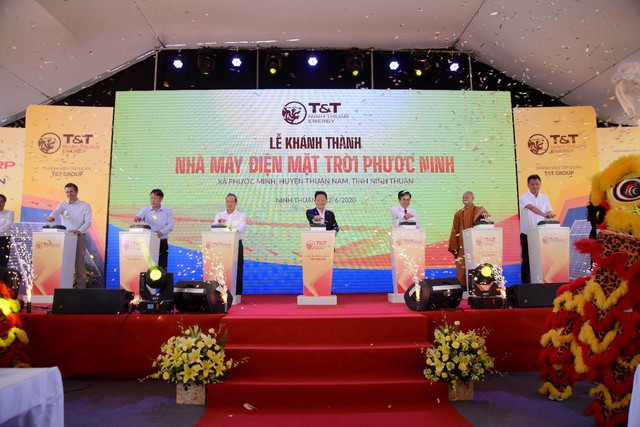
The Phuoc Ninh Solar Power Plant marks T&T’s first step into energy after 15 years of preparation.
T&T’s momentum in energy aligns with Jim Collins’ “flywheel effect” from his book Good to Great. Collins describes it as persistent effort leading to breakthrough success, akin to a flywheel gaining unstoppable momentum.
For T&T, Do Quang Hien initiated this flywheel nearly two decades ago. Years of resource accumulation led to the 2020-2025 leap, positioning T&T as a key player in Vietnam’s energy strategy.
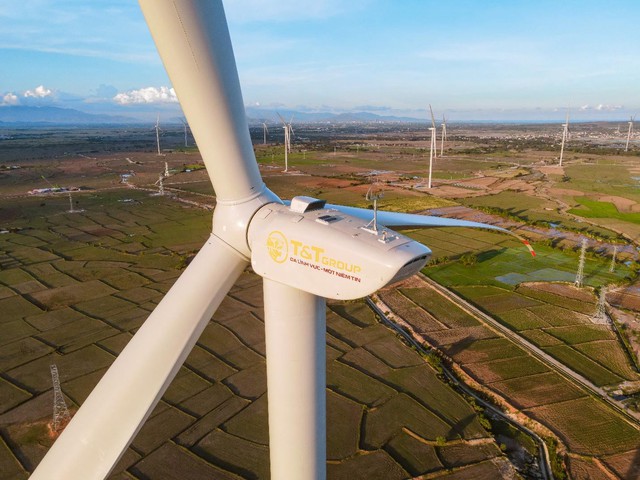
The Phuoc Huu – Duyen Hai 1 Wind Power Project by T&T Group.
With a strong foundation, T&T aims to contribute to national energy infrastructure. Projects like the 1,500 MW Hai Lang LNG Power Plant in Quang Tri, set for 2029, will make the province a central clean energy hub. T&T also pioneers offshore wind, LNG hubs, green hydrogen, and battery storage systems.
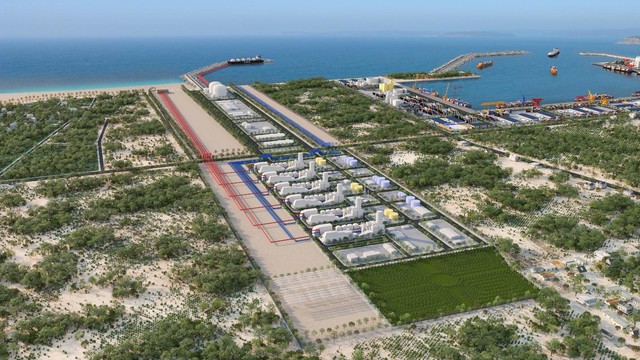
Rendering of the Hai Lang LNG Power Project in Quang Tri.
By 2035, T&T targets 16-20 GW of power capacity, 10% of Vietnam’s total, mostly from clean energy, supporting the 2050 net-zero goal.
Long-term, T&T proposes a high-tech renewable energy industrial park in Vietnam. As Hien noted, “With growing renewable projects, Vietnam needs local manufacturing to reduce imports. In 10 years, we aim for a renewable energy industry, serving both domestic and regional markets.”
Nation, People, and Technology
T&T’s nearly two-decade energy journey reflects its core values: nation, technology, and people. Do Quang Hien emphasizes sustainable value over quick profits.
He shared, “Energy isn’t about quick gains. It’s about long-term value for society and the nation. Technology drives progress. We focus on high-tech solutions across sectors.”
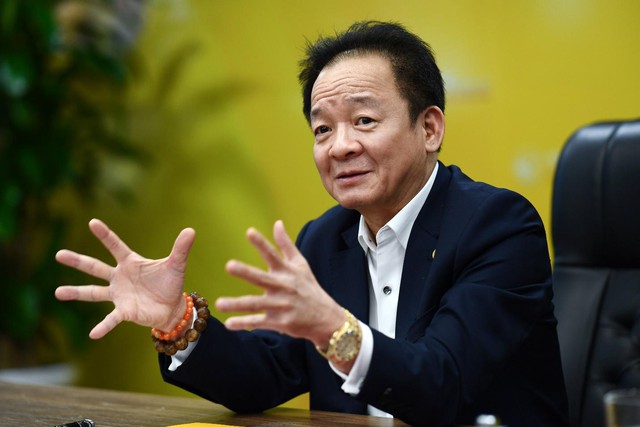
T&T partners with global leaders like Hanwha, Kogas, and BP, ensuring technology transfer and local training. Hien insists on win-win partnerships contributing to Vietnam’s sustainable development.
“Partners must align with national goals and ensure mutual benefits, including technology transfer and training,” he stated. Many partners now commend T&T’s commitment to Vietnam’s progress.
“By 2045, Vietnam aims for developed status. This requires skilled people, trained through partnerships and technology transfer,” Hien emphasized.

Dr. Tran Dinh Thien, former Director of the Vietnam Institute of Economics, praised Hien’s leadership in clean energy. “Do Quang Hien is a pioneer in supporting national policies through sustainable energy projects,” he said.
As T&T Group marks 32 years, its energy sector thrives. Domestic projects enhance energy security, while Savan 1 in Laos will soon supply clean energy to Vietnam. Future projects in Nha Trang and Ca Mau aim to establish regional energy export hubs.
T&T’s broad and deep initiatives lay a strong foundation for sustainable growth, reflecting its commitment to Vietnam’s energy future and double-digit growth aspirations.
Electric Bike Battery Life: Dat Bike’s Solution to Cost Efficiency

The cost of battery replacement has long been a significant financial hurdle for electric vehicle users and a complex challenge for manufacturers. However, Dat Bike, a leading electric motorcycle brand, recently made a groundbreaking announcement regarding the longevity of their electric vehicle batteries.
Top 10 Most Reputable Pharmaceutical Companies in 2025: FPT Long Châu Climbs to Top 3 in Distribution, Vinmec Leads as No. 1 Private Hospital

In the healthcare ecosystem, each business segment exhibits distinct operational characteristics and growth drivers during the first nine months of 2025.
“Pen King” Thien Long Falls into Japanese Hands: Extending the List of Vietnamese Brands Acquired by Foreign Entities

With the announcement from Japan’s Kokuyo Group regarding its acquisition of Thien Long Group Corporation, a beloved Vietnamese stationery brand is set to come under foreign ownership.
Billionaire Pham Nhat Vuong’s VinEnergo Appoints New Leadership: Former VinaCapital Executive Takes the Helm
VinEnergo marks its official entry into the renewable energy sector with the addition of electricity production from renewable sources (code 3512) to its business portfolio.
RMIT Expert Explores Digital Banking in the New Era: AI Empowers, Enhances, and Personalizes the Banking Experience

Paying for iced tea, parking via QR codes, and settling electricity and water bills through banking apps are becoming the new norms for consumers. This shift not only reflects evolving spending habits among Vietnamese citizens but also marks a significant leap forward for digital banking in Vietnam.