Urgently Clearing Legal Bottlenecks for Hanoi’s Mega Projects
On December 8th, the Government presented a draft resolution to the National Assembly, proposing special mechanisms and policies to facilitate major projects in the capital city.
According to Minister of Finance Nguyen Van Thang, Hanoi is currently implementing a significant number of critical projects, including public investment projects, public-private partnership (PPP) initiatives, strategic investor-led ventures, and urban renewal and old apartment building reconstruction efforts.
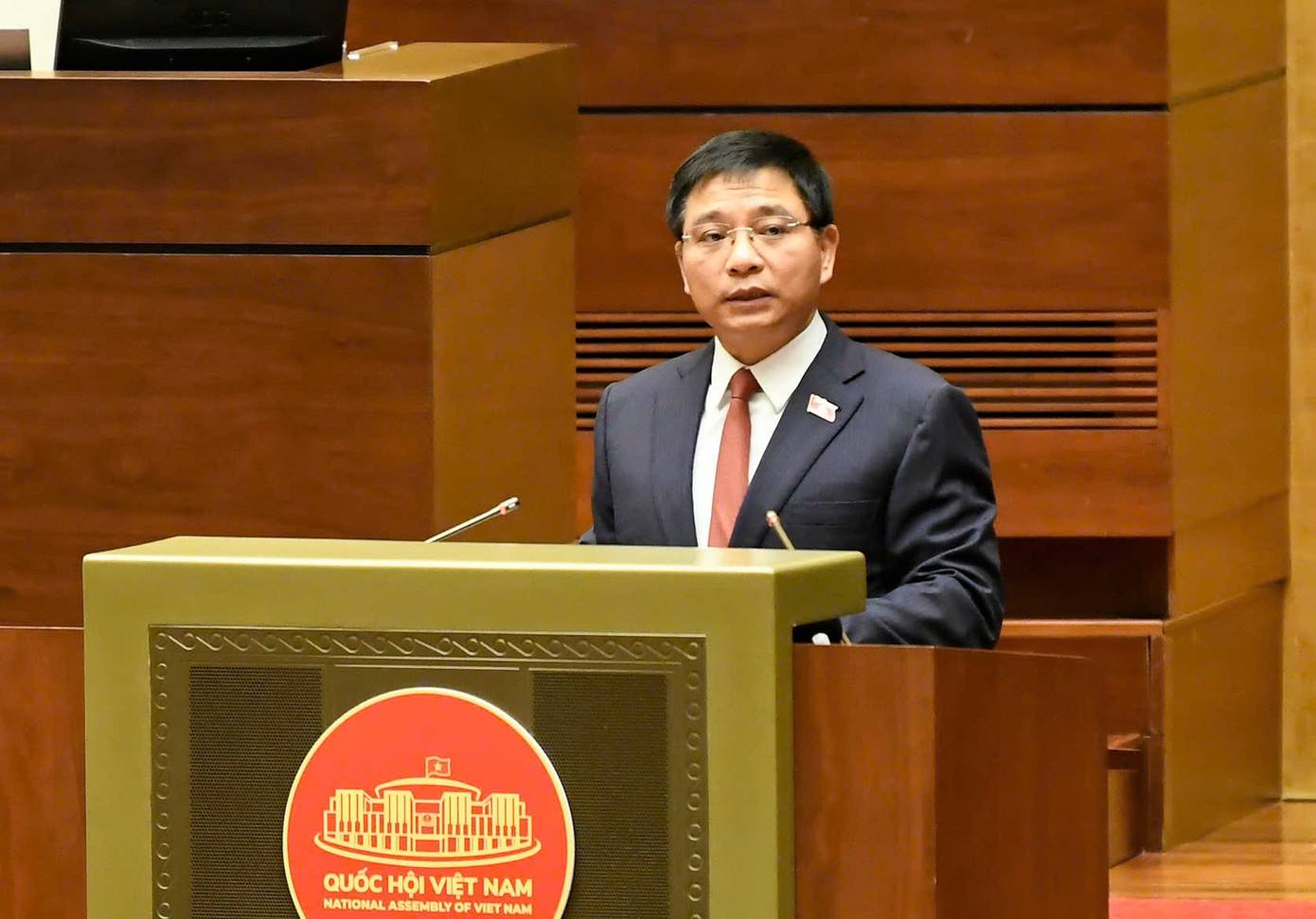
Minister of Finance Nguyen Van Thang. Photo: Nhu Y
The execution of these large-scale, high-priority projects, especially the upcoming mega-projects, faces numerous challenges and obstacles that hinder Hanoi’s ability to fully leverage its role and position, particularly in the context of achieving double-digit growth during the 2026-2030 period.
Given these circumstances, the issuance of a resolution allowing Hanoi to pilot special mechanisms and policies is both necessary and urgent. This aims to remove legal bottlenecks and attract investment.
The draft resolution proposes pilot special mechanisms for public investment projects, PPP projects meeting national key project criteria, and projects using local budgets or legal local capital within the city, with a total investment of VND 30 trillion or more.
Notably, the draft resolution stipulates that for public investment projects, PPP projects, and investment projects under the Investment Law that require immediate implementation as directed by the Politburo, the Secretariat, the Government Party Committee, and the Hanoi Party Committee, compensation, support, and resettlement levels will be twice the standard rates.
High-Rise Buildings Above, Metro Stations Below
Speaking at the session, Delegate Hoang Van Cuong (Hanoi) supported the need for a resolution to pilot special mechanisms and policies for implementing major, important projects in the capital. This would create a flexible and favorable environment to attract optimal investment resources.
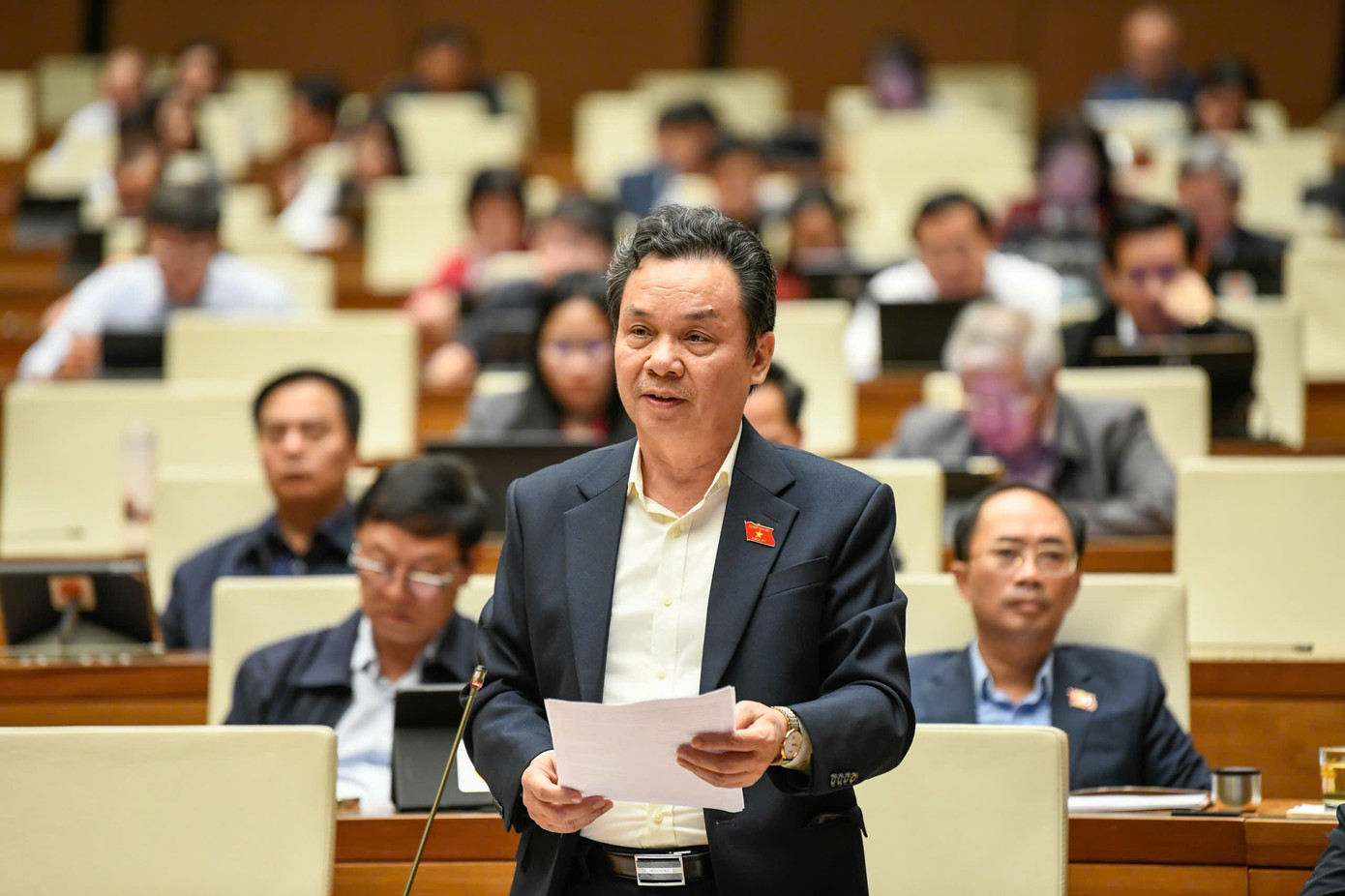
Delegate Hoang Van Cuong. Photo: Nhu Y
“I propose that urban redevelopment areas increasing population density must follow the TOD model: high-rise buildings above and metro stations with underground spaces for services below.”
Delegate Hoang Van Cuong
Additionally, Delegate Hoang Van Cuong fully supported the regulation allowing urban renewal when over 75% of property owners and 75% of land users in the redevelopment area agree. This includes the authority to decide on planning, architectural, and population indicators. He emphasized that without this mechanism, it would be impossible to renovate old, unsafe apartment buildings lacking proper fire escape routes.
Furthermore, the Hanoi delegate suggested revisiting the planning of the historic inner city area, which should only include zones requiring historical value preservation, such as Ba Dinh, West Lake, and the Old Quarter. These areas should not permit high-rise construction, preventing increased population density.
According to Delegate Hoang Van Cuong, including the entire former Hai Ba Trung and Dong Da districts, which have many old apartment buildings and low-rise structures needing renovation, in the historic inner city area is not only self-limiting but also restricts residents in these areas from renovating and constructing homes due to their location within the historic inner city.
While agreeing with the proposal for fair compensation for residents during important projects, Mr. Cuong also concurred with the Finance and Budget Committee’s review: doubling the compensation rate should not be mandated. He explained that the compensation rate is determined by the city based on the K coefficient for each location multiplied by the land price table.
“If the city wishes to compensate at a higher rate, it can adjust the K coefficient accordingly. Moreover, the Capital Law already allows the city to determine compensation and support policies for residents during urban renewal,” Mr. Cuong clarified.
“This resolution is not a special favor for the capital but a limited pilot mechanism aimed at helping Hanoi better fulfill its role as the nation’s political and administrative center, as well as a major hub for culture, economy, science, technology, and education,” noted National Assembly Delegate Nguyen Thi Lan.
Giant Serpent-Shaped Structure Set to Unveil in the Heart of Hanoi
A colossal serpentine structure is taking shape in the heart of Lệ Mật’s traditional craft village (Việt Hưng Ward), captivating onlookers with its bold, undulating design and unprecedented scale. This unique project has swiftly captured the imagination of locals and architects alike, poised to become a groundbreaking new landmark for Hanoi.
Unlocking Innovation: Free Trade Zones as Institutional Sandboxes for Economic Growth

National Assembly delegate Trịnh Thị Tú Anh posits that free trade zones represent a “test of institutional mindset” as the nation seeks new growth drivers. Consequently, these zones should be viewed as an “institutional sandbox.”
Unifying Two Major Plans into a Century-Long Comprehensive Master Plan for the Capital
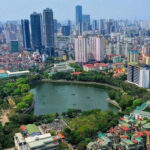
The Hanoi City leadership has directed the research and implementation of a merger between the Capital Planning and the Adjustment of the Capital Master Plan, envisioning a “Comprehensive Capital Plan with a 100-year Vision.” This initiative aims to incorporate the latest developmental context, ensuring a forward-thinking and unified approach to the city’s long-term growth.
Proposed Ban on Gasoline-Powered Ride-Hailing Vehicles in Hanoi

The Hanoi People’s Committee has proposed that software application providers should not partner with operators using fossil fuel-powered motorcycles and motorbikes from July 1, 2026.
“Luxury Hanoi Neighborhoods to Bid Farewell to Flooding Woes During Heavy Rains with This Innovative Solution”
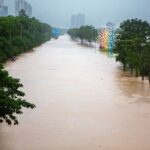
The Hanoi People’s Committee has mandated the urgent rehabilitation of the Thuy Phuong canal to address water supplementation from the To Lich River and mitigate localized flooding in the Resco, Ecohome, Diplomatic Corps, Tay Ho Tay, Ciputra, and surrounding areas.