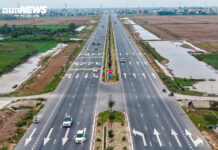
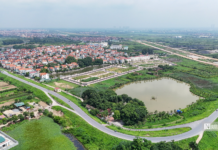
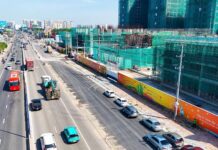
Throughout history, iconic bridges have transformed cities—the Brooklyn Bridge reshaped eastern New York, Tsing Ma Bridge redefined Hong Kong, and Harbour Bridge became Sydney’s global symbol. Now, Long Biên stands poised for a similar metamorphosis, driven by Hanoi’s visionary plan to expand along the Red River in a new era.
A Strategic Bridge to Expand the City Center
The bridges spanning the Red River have long been integral to Hanoi’s urban growth. Yet, current crossings fall short of meeting the city’s escalating demands for freight transport and economic connectivity. While the central urban area thrives with high population density, the eastern region, despite its vast potential, lags due to inadequate connectivity.
Presently, residents rely on Long Biên, Chương Dương, or Vĩnh Tuy bridges to travel from central Hanoi to Long Biên. However, the Hanoi Department of Construction reports that during peak hours, traffic on these bridges surges to 150-200% of their designed capacity. This critical situation underscores the urgent need for large-scale bridges that not only enhance transportation networks but also foster balanced development on both riverbanks.
Since early this year, Hanoi has initiated construction on four major bridges—Trần Hưng Đạo, Tứ Liên, Ngọc Hồi, and Thượng Cát—with Vân Phúc, Hồng Hà, and Mễ Sở slated for December. Among these, the Trần Hưng Đạo Bridge, positioned between Vĩnh Tuy and Chương Dương, emerges as a flagship project of strategic importance.
With an estimated investment of 16.226 trillion VND, the bridge features six vehicle lanes, two bicycle lanes, and two pedestrian lanes. This design significantly alleviates traffic congestion, facilitates smoother travel, and addresses urban sprawl by encouraging growth in satellite cities. Notably, it directly connects Long Biên to the Old Quarter, fostering economic and cultural synergy while boosting the eastern real estate market.
A Catalyst for Rising Property Values in Eastern Hanoi
Decades ago, bridges were primarily built for convenience. Today, they must also balance development and harmonize growth on both riverbanks.
History shows that improved infrastructure correlates with population growth and heightened demand for new living spaces. Enhanced connectivity acts as a catalyst for the real estate market’s expansion, especially as central land becomes scarce and prohibitively expensive.
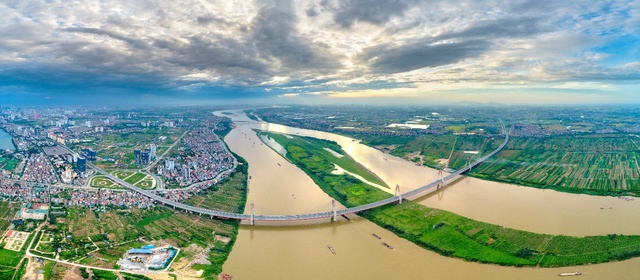
Infrastructure connectivity propels real estate market growth.
Before 2010, the eastern region was overlooked by investors. However, the construction of bridges like Vĩnh Tuy, Thanh Trì, Đông Trù, and Nhật Tân spurred the rise of multi-billion-dollar urban developments in Long Biên, Gia Lâm, and Đông Anh, rapidly driving up land prices.
Long Biên, the primary beneficiary of the 338 trillion VND Red River Landscape Avenue project, is witnessing a resurgence with the Trần Hưng Đạo Bridge. According to Batdongsan.com.vn, land prices in Long Biên Ward have surged 38% in the past year, marking a six-year high.
This growth is easily explained: with the new infrastructure, Long Biên residents can reach the old city center in under 10 minutes and seamlessly access National Highway 5, Ring Road 3, and the Hanoi-Haiphong Expressway—key arteries fostering regional connectivity and new satellite commercial hubs.
The eastern real estate market also benefits from an influx of affluent residents seeking satellite urban living. Unlike the crowded city center, Long Biên’s expansive land allows for eco-friendly, luxury developments. The area is also a weekend destination for the elite, drawn to the international-standard 27-hole Long Biên Golf Course.
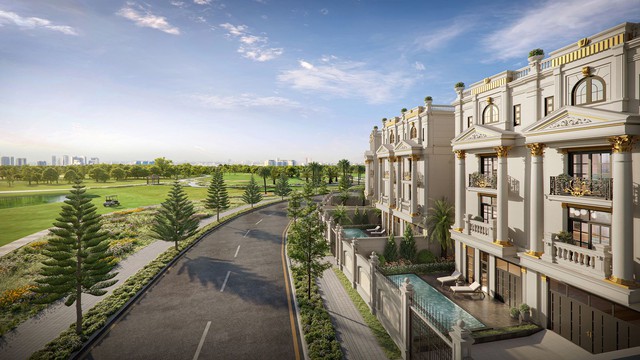
Luxury villas near Long Biên Golf Course are highly sought after by the ultra-wealthy.
Hanoi’s urban and real estate landscape for decades to come will be shaped by these strategic bridges. Situated in a prime development zone, Long Biên is poised to leave an indelible mark on the city’s real estate map.
This positions eastern Hanoi as the next frontier for ultra-wealthy investors, offering not only significant price appreciation potential but also exclusive eco-friendly living with seamless connectivity. Properties like Long Bien Golf Villas, strategically located near the golf course, will become coveted assets, embodying prestige and refined living for the elite.
Hanoi Secretary Directs Timely Completion of Belt Road 2.5 Project
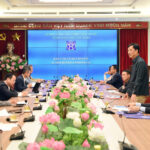
On the afternoon of December 9th, Politburo member and Secretary of the Hanoi Party Committee, Nguyen Duy Ngoc, chaired a meeting with relevant agencies and units to address challenges and obstacles in the implementation of the Ring Road 2.5 project.
Unlocking Vũng Tàu’s Coastal Potential: 5 Infrastructure Projects Revitalizing the Real Estate Market
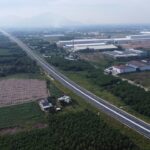
A wave of critical infrastructure projects in Southern Vietnam is accelerating construction, aiming for completion by December 2025. From highways and airports to coastal routes and inter-regional connections, the impending completion of this transportation network lays a vital foundation for Vung Tau’s real estate boom, unlocking new potential for its coastal development.
182 Motorcyclists and Car Owners Identified via AI Cameras Urged to Pay Traffic Fines Under Decree 168
These incidents have been reported to the relevant authorities and vehicle owners for appropriate action and violation handling.
Double Compensation for Large Projects in Hanoi: A Feasible Policy?

Prior to the proposal, a member of the National Assembly argued against setting compensation at twice the stipulated rate. The reasoning was that the stipulated amount is determined by the city itself, based on the K coefficient for each location multiplied by the land price table.
Giant Serpent-Shaped Structure Set to Unveil in the Heart of Hanoi
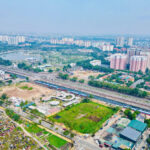
A colossal serpentine structure is taking shape in the heart of Lệ Mật’s traditional craft village (Việt Hưng Ward), captivating onlookers with its bold, undulating design and unprecedented scale. This unique project has swiftly captured the imagination of locals and architects alike, poised to become a groundbreaking new landmark for Hanoi.