









At the Vietnam M&A Forum 2025, organized by the Finance and Investment Newspaper on the afternoon of December 9th in Ho Chi Minh City, Mrs. Vo Ha Duyen, Chairwoman of VILAF Law Firm, provided insightful analysis on the criteria investors seek for effective mergers and acquisitions (M&A) activities.
Mrs. Duyen discussed how, beyond the opportunities businesses pursue, we can observe a company’s lifecycle from a startup to a larger enterprise, engaging in promotional activities, and even moving towards an IPO. However, not all listed companies perform effectively in the public market. In many cases, a company’s true value is better realized when it reverts to a private entity, managed by a few major shareholders. Thus, alongside the excitement for IPOs, we should also consider the reverse side of the cycle: privatization. To achieve this, Vietnam needs to adjust its legal framework, particularly by establishing a legal mechanism for mandatory minority shareholder buyouts.
From a transaction advisor’s perspective, Mrs. Duyen highlighted the perception gap between buyers and sellers. Sellers aim for a valuation that reflects high confidence in the company’s prospects over the next one to two years, expecting a higher valuation. Buyers, on the other hand, take a more cautious approach, considering the overall market. In the past 2-3 years, this expectation gap has created a significant valuation discrepancy, making it challenging for both parties to reach an agreement.
Another critical factor is that investors need to see consistent growth and operational results over 36 months, or even the most recent 34 months, to build trust in each commitment. This is one of the reasons M&A transactions often take longer to complete.
To address these challenges, Mrs. Duyen emphasized that the top issues are transparency, corporate governance, and foreign ownership limits. These factors directly impact the investment environment and investors’ decision-making processes.
Administrative reforms are shifting decision-making power from central ministries to local authorities. The revised Investment Law delegates investment approval for multiple projects to local levels, rather than centralizing it. Additionally, Vietnam is promoting investment in technology and innovation, potentially reducing the total implementation time for construction and industrial technology projects by approximately two months. Vietnam is clearly positioning itself as a technology development hub, according to Mrs. Duyen.
Another significant change is the development of the capital market. Previously, the listing process was lengthy, but now, after approval, trading can begin almost immediately. This enhances transparency for foreign investors in Vietnam’s capital market. Vietnam is also expanding recognition of international credit rating organizations, not limiting them to those licensed by the Ministry of Finance, but opening up to entities like S&P and Fitch. This move aims to deepen integration with the international capital market and make credit ratings more reliable for investors.
These reforms are driving positive changes, making Vietnam’s M&A market more focused on governance and transparency.
Mrs. Duyen also mentioned the two most significant issues affecting M&A transactions this year: the M&A approval process and economic concentration control procedures, and the capital exit mechanism.

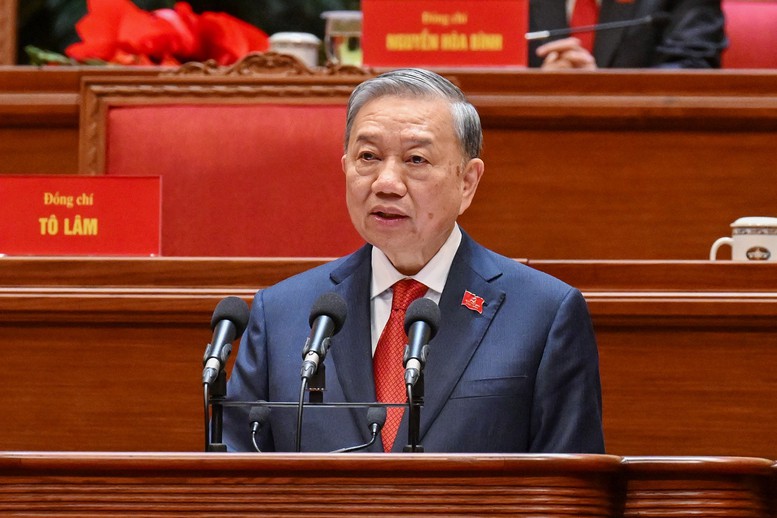
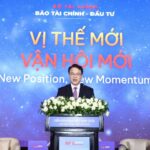
Mrs. Vo Ha Duyen, Chairwoman of VILAF Law Firm, speaking at the Vietnam M&A Forum 2025. Photo: Organizer
|
Experts note that investors desire an approval mechanism with clear criteria and rules, allowing them to predict processing times and outcomes, rather than relying heavily on subjectivity. This is especially important for companies owning land or operating in conditional business sectors.
Regarding the capital exit mechanism, investors seek greater legal clarity, as it encourages them to pay higher prices. For international institutional investors, the first question is not just “Can we invest?” but also “Can we legally exit, on time, and preserve the investment’s value?” If the exit mechanism is unclear in the legal framework or contract, or if there are too many unforeseen scenarios, investors may delay, demand stronger protections, or even reject the deal.
Recent reforms have been transformative and positively impact investors. What investors seek are clearer, more predictable criteria for economic concentration control approvals, as well as clear and practical capital exit mechanisms, Mrs. Duyen concluded.
– 21:56 09/12/2025
Identifying Bad Businesses vs. Good Businesses in Bad Situations

Distinguishing between a “bad business” and a “good business in a bad situation” is critical, according to experts. This distinction is the pivotal factor that determines the success or failure of a restructuring deal.
Vinamilk Solidifies Its Leadership in ESG Excellence

Vinamilk solidifies its pioneering position with a series of prestigious awards in sustainable development and corporate governance in 2025. From the Listed Company Awards (VLCA) 2025 to the Vietnam Sustainability Index (CSI) 2025, the company consistently garners recognition across key categories, underscoring its robust ESG strategy implemented with tangible impact and aligned with long-term competitive capabilities.
Domestic Private Enterprises: The Rising Power in M&A Activities
According to the Ministry of Finance’s leadership, domestic private enterprises are increasingly becoming a pivotal force driving the growth of Vietnam’s M&A market. A growing number of foreign companies are seeking partnerships with local businesses for investment, production, and trade collaborations.
Foreign Capital Infuses $6.1 Billion into M&A Deals with Vietnamese Firms: GELEX Execs and TTC Chairman Dang Van Thanh Share Insights on Deal-Making Mindset and Skills

The Vietnam M&A Forum 2025 highlights a surge in foreign investment for M&A, driven by attractive valuations and a thriving economy. Meanwhile, domestic leaders like TTC and Gelex are proactively adopting green standards and transparency to seize emerging opportunities.
Revisiting the Historic Bank and Credit Union Merger: Insights from Đặng Văn Thành
Vietnam’s Mergers and Acquisitions (M&A) market is consistently regarded by foreign investors as a secure, attractive, and highly promising arena.