













At the launch meeting of the “Handbook for Coordinating Support in Handling Risks Associated with Accounts/Cards/Payment Units Involved in Suspected Fraudulent Money Transfer/Payment Transactions” on the morning of October 21, Dr. Nguyễn Quốc Hùng, Vice Chairman and Secretary-General of the Vietnam Banks Association, emphasized the importance of combating fraud in the financial and banking sectors.
“If each bank only implements its own internal regulations, it will be very difficult to address fraud comprehensively. Financial fraud can only be effectively prevented through synchronized coordination between banks and law enforcement agencies. Even a few minutes of delay can result in funds being dispersed across multiple intermediary accounts, making tracing and recovery challenging,” said Dr. Hùng.
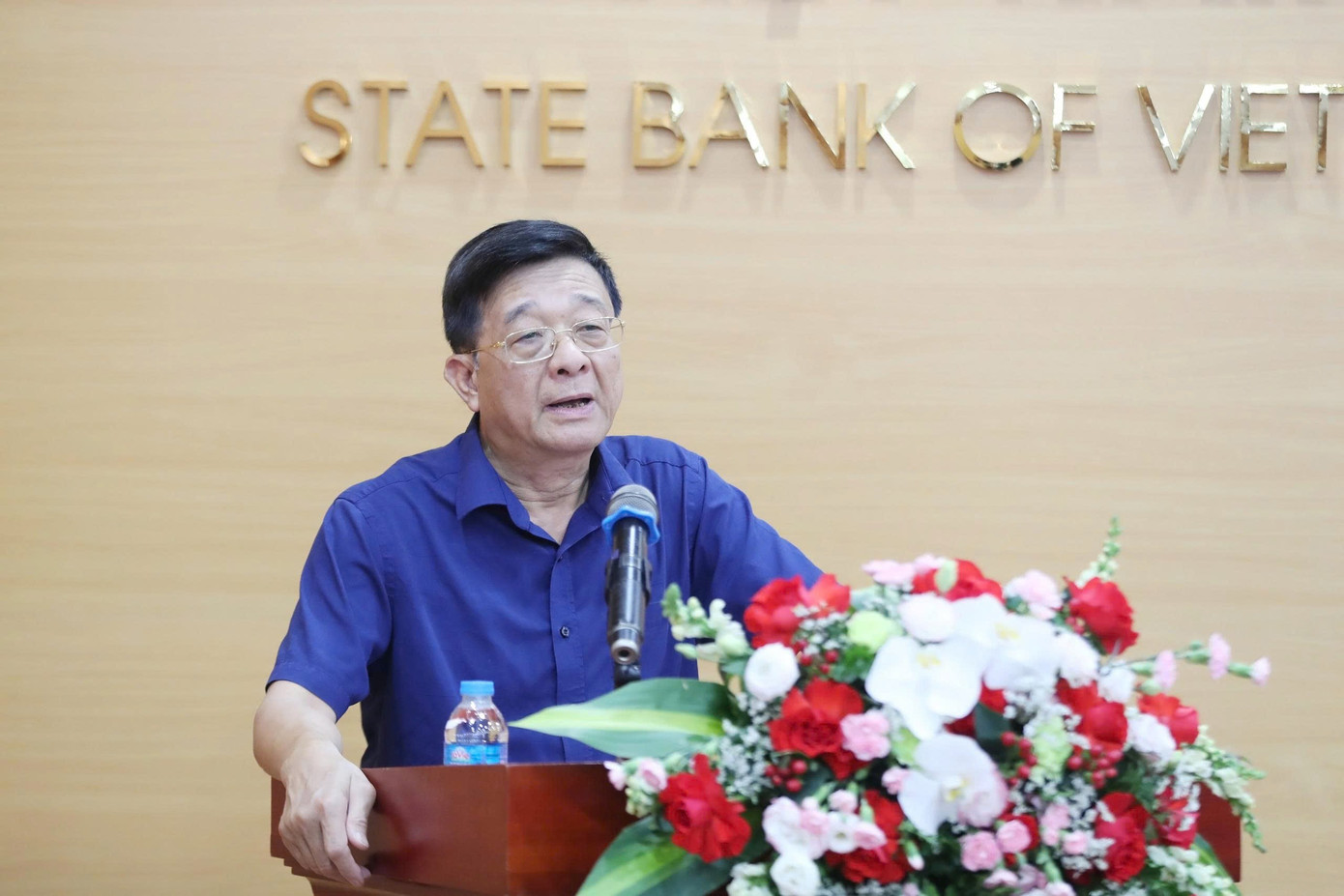
Dr. Nguyễn Quốc Hùng, Vice Chairman and Secretary-General of the Vietnam Banks Association.
Dr. Hùng further noted that while the handbook is not a legally binding document, it is built upon existing government decrees and circulars issued by the State Bank of Vietnam.
A key highlight is that the Vietnam Banks Association will act as the central oversight body, monitoring implementation, compiling feedback, and reporting non-compliant credit institutions to the State Bank of Vietnam.
Dr. Hùng also mentioned that the association will continue to collaborate with regulatory bodies and the Ministry of Public Security to develop additional specialized guidelines, particularly in the areas of card and electronic payments, where fraud risks are rapidly increasing. The handbook is expected to establish a foundation for a proactive prevention and rapid response mechanism, ensuring a safer and more transparent Vietnamese banking system in the digital age.
Mr. Hoàng Ngọc Bách, Head of Division A05 at the Ministry of Public Security, stated that in recent years, high-tech crimes, especially in the financial and banking sectors, have become increasingly complex, with increasingly sophisticated schemes.
According to Mr. Bách, while banks and regulatory agencies are working to improve coordination processes, criminal groups have “gone much further” in organizing, managing, and exploiting loopholes in the financial system for money laundering or asset theft. “If we do not promptly tighten coordination mechanisms and proactively prevent, we will always be reactive and lag behind the criminals,” Mr. Bách warned.
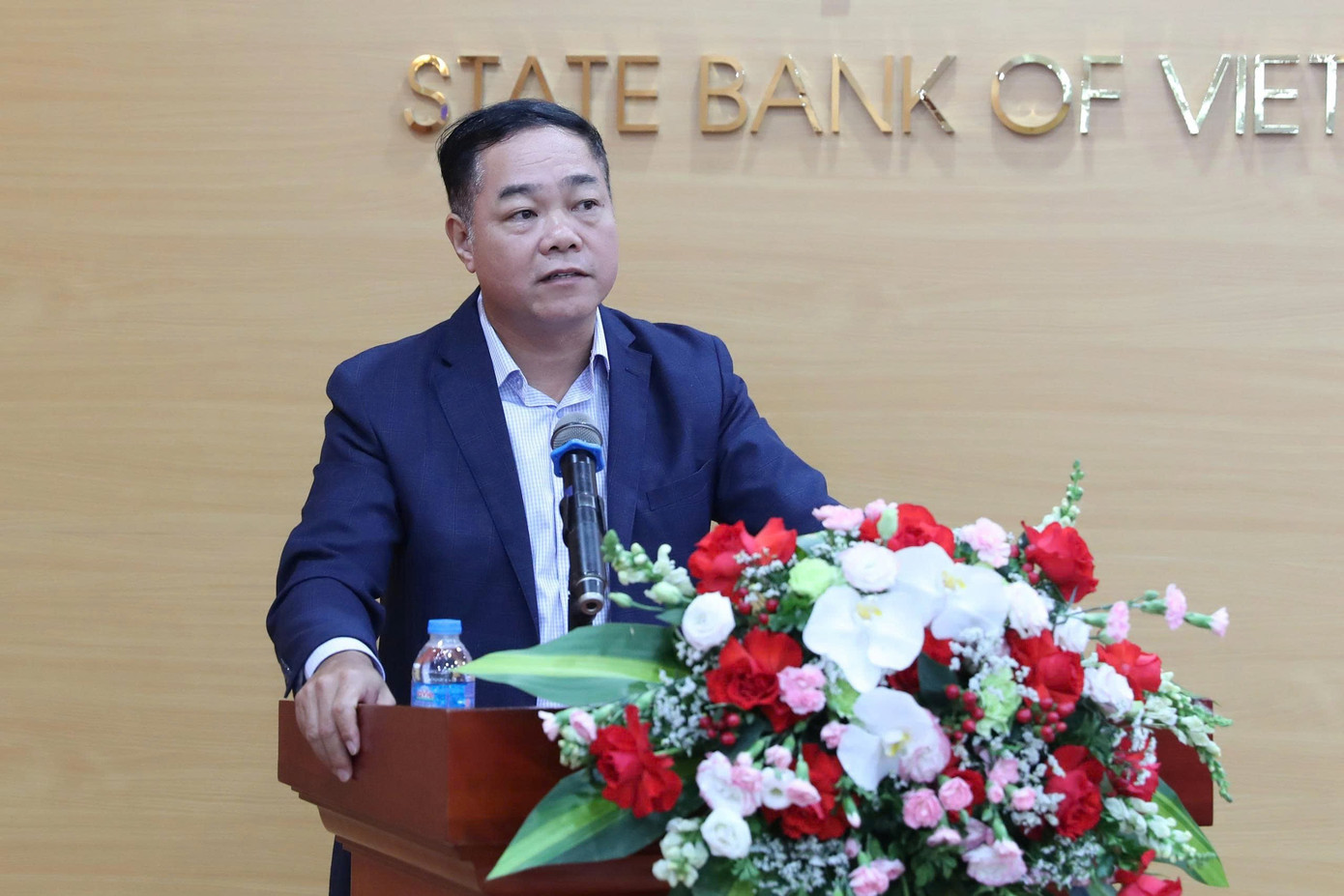
Mr. Hoàng Ngọc Bách, Head of Division A05, Ministry of Public Security.
Mr. Bách emphasized that to enhance prevention effectiveness, coordination between banks and police agencies must occur within the “golden time frame.” Currently, the post-complaint handling process remains slow: “In many cases, from the time the victim reports to when the bank provides data to investigators, it takes several months. By then, the funds have passed through multiple intermediary accounts, making tracing nearly impossible,” Mr. Bách said.
Mr. Bách affirmed that only when banks, regulatory agencies, and police forces truly collaborate closely, with a high sense of responsibility and determination, can the fight against financial fraud and scams achieve tangible results.
A representative from VietinBank noted that a major challenge is criminals exploiting instant money transfer speeds to dissipate assets. Many transactions are conducted through e-wallets or intermediary platforms, complicating tracing efforts.
“Even a delay of a few minutes can result in funds being fragmented and transferred through multiple layers of intermediaries, making recovery nearly impossible,” the VietinBank representative said.
Unified Banking Framework Launched to Combat Card and Account Fraud

To combat credit card and account fraud, banks have established a unified framework, outlining specific procedures to address and mitigate fraudulent activities upon detection.
Police Issue Urgent Alert Regarding Pensions, Social Insurance, and Health Insurance
Unveiling a sophisticated new scam, meticulously crafted with forged images, text, seals, and logos, perpetrators are cunningly building trust before ultimately seizing their victims’ assets.
Upcoming Fraud Coordination Handbook: Banks Often Left Clueless in Incidents, Resorting to ‘Funds Are Gone, Irretrievable’ Responses
The Vietnam Banking Association has recognized the imperative need to publish a comprehensive Handbook for Coordinated Fraud Management among its member organizations.
Unveiling the Trial of Accomplices Behind 27 Shell Companies in Mr. Pips Phó Đức Nam’s Fraud Scheme

Misappropriated funds, under the direction of Mr. Pips, were strategically cycled to create an illusion of liquidity, subsequently extracted through various methods including cash withdrawals, gold purchases, and conversion into USDT.
Female Accountant Embezzles Over 18.7 Billion Dong

On September 15th, the Ho Chi Minh City People’s Court commenced the first-instance trial of Nguyen Thi Thu Trang (55, residing in Ho Chi Minh City) on charges of “Fraud to Appropriate Property.”