As of the morning of October 21st, the SJC gold bar price was traded by major companies at around 151.5 million VND per tael (selling price), while smooth gold rings were priced at approximately 150.2 million VND per tael (selling price). These prices consistently exceed the global gold rate by 13-15 million VND per tael. Despite the high prices, buying and selling gold bars remain challenging due to their scarcity in the market.
In this context, many anticipate that policies to liberalize gold bar trading, allow gold raw material imports, and establish a gold trading platform will cool down SJC gold bar prices, narrowing the gap with global rates.

A national gold trading platform is expected to stabilize the gold market.
Economist Dr. Dinh The Hien notes that Vietnam’s gold market has recently shown strong speculative signs, with global gold prices reaching new highs while domestic supply remains scarce. Implementing a gold trading platform and allowing gold imports, he argues, will increase supply, reduce speculative behavior, and cool down the market. “When gold is imported, people will no longer expect prices to rise indefinitely, reducing the rush to buy. Establishing a gold trading platform is a crucial step toward market stability,” Dr. Hien stated.
He also believes that creating a gold trading platform is essential if Vietnam aims to develop an International Financial Center in Ho Chi Minh City. A modern financial hub must include components like stock markets (equities, bonds), commodity markets (oil, coffee, agricultural products), with gold being a key internationally standardized asset. “The gold trading platform should be studied and integrated into the national commodity trading system, aligning with the development of the international financial center,” Dr. Hien added.
However, for the gold trading platform to be sustainable and transparent, Dr. Hien emphasizes that ensuring payment and physical delivery is critical, allowing individuals to receive real gold when needed. He stresses that in the initial phase, the platform should be operated by a state-owned enterprise or a state-controlled entity to build market trust and prevent price manipulation.
Currently, domestic SJC gold bar prices remain 13-15 million VND per tael higher than global rates, with gaps reaching up to 20 million VND per tael at times. This disparity highlights the imbalance between domestic supply and demand and is one reason regulators are accelerating plans to establish a gold trading platform to narrow price gaps and enhance market transparency.
According to Dr. Dao Le Trang Anh, a lecturer at RMIT University Vietnam, the gold trading platform should aim to create a legal, transparent, and supervised trading space where individuals can freely buy and sell within clear regulations. She suggests that the government should separate regulatory functions from business operations to ensure proper market direction.
Regarding the operating model, Dr. Trang Anh proposes combining physical gold and gold account transactions to align with traditional gold storage habits while catering to modern investment trends. “Physical gold transactions will bring gold outside the system into formal channels, increasing transparency and enabling more effective state management. Gold account transactions, on the other hand, serve investors seeking quick trades without storage or transportation costs, fitting the financial digitalization trend,” she explained.
She cites the Shanghai Gold Exchange (SGE) in China, which has successfully implemented this combined model to enhance liquidity, curb speculation, and control gold flows in the economy. However, to enable gold account transactions in Vietnam, Dr. Trang Anh notes that several foundational elements must be unified: identifying a key regulatory body (possibly the State Bank of Vietnam), developing an electronic trading system, account opening procedures, custody mechanisms, and gold quality standards.
Additionally, experts recommend establishing a national gold standard system, specifying purity, origin, and certification requirements. They also encourage cashless payments in gold transactions to prevent money laundering and tax evasion, while exploring the issuance of gold certificates—a financial instrument allowing indirect gold investment and reducing physical holding demands.
SJC Gold Bar Prices Plummet by 11 Million VND per Tael in the Open Market

The price of SJC gold bars at major enterprises and banks is approximately 15 million VND per tael lower than the free market rate.
SJC Gold Bar Prices Plummet by 15 Million VND in Just 2 Days

In just two days, the price of SJC gold bars in the free market plummeted by a staggering 15 million VND from its peak.
Unlocking Gold Trading Floors to Stabilize the Market

Many economists believe that establishing a national gold trading platform is a key solution to stabilizing the gold market.
When Will Imported Gold Hit the Market?

Qualified businesses and commercial banks will be allocated gold import quotas before December 15th annually.
Gold Ring and Bullion Prices Hit New Peak on September 30th Morning
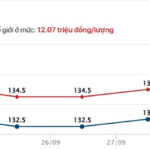
Domestic gold prices continue to set new highs, with gold bars reaching a staggering 136.5 million VND per tael, while gold rings also hit a record 133.6 million VND per tael.