














During the government press conference on December 6th, a VTC News reporter asked: “Prime Minister has mandated the completion of 1,628 new homes for flood-affected residents by January 31, 2026. Could ministries provide details on approved flood-resistant housing designs and the sourcing of materials to meet this deadline?”
The reporter also requested the Ministry of Construction to outline proposed infrastructure projects for central Vietnam to better cope with increasingly severe and unpredictable natural disasters.

Mr. Nguyen Tri Duc – Chief of Office, Spokesperson for the Ministry of Construction.
Addressing infrastructure proposals for central Vietnam, Mr. Nguyen Tri Duc, Chief of Office and Spokesperson for the Ministry of Construction, stated that in 2021, the Ministry of Transport (now integrated into the Ministry of Construction) initiated comprehensive national sectoral planning across five transportation domains, based on the National Master Plan.
For the Central and Central Highlands regions, the plan includes: 11 expressway routes totaling nearly 1,500 km, 24 major national highways exceeding 4,400 km to connect key economic corridors; 14 airports; 14 seaports with 89 berths and 208 port bridges spanning 36,923 meters; 27 inland waterways covering 1,263 km; and 1,332 km of the North-South railway line.
Notably, the Ministry of Construction is considering adding two more regional airports in central Vietnam to enhance emergency response and rescue capabilities in the Central and Central Highlands regions.
Given the increasingly unpredictable and severe global climate changes, Mr. Nguyen Tri Duc emphasized the need for a shift in approach, models, and calculation methods in planning and project approval to ensure scientific rigor and practical applicability.
The Ministry of Construction recommends that the Ministry of Agriculture and Environment update climate change response scenarios promptly. These updates will enable sectors to develop adaptive solutions tailored to their specific challenges.
Following the National Assembly’s approval of the National Master Plan aligned with new socio-economic development goals, the Ministry of Construction will adjust the National Sectoral Plan for five domains and incorporate the latest climate change and sea-level rise scenarios into strategic environmental assessments.
The Ministry of Construction also instructs investors to base their technical solutions on the latest climate change and sea-level rise data from the Ministry of Agriculture and Environment, including 2025 hydrological and meteorological records. These solutions must ensure safety, sustainability, and maximize investment efficiency.
Innovative Flood-Resistant Housing Designs
Regarding flood-resistant housing, the Ministry of Construction’s Chief of Office noted that since 2014, the Prime Minister has implemented policies supporting low-income households in building storm and flood-resistant homes in central Vietnam, covering 13 provinces and cities in the North Central and Coastal Central regions (pre-merger).
Localities have developed a minimum of three housing designs, with some creating up to 6-8 models. The Ministry of Construction has also published 176 ready-to-use safe housing designs for disaster resilience.
“While these designs have proven effective against storms and floods, recent years have seen more complex and severe weather events nationwide. This necessitates new housing designs that better address current realities,” Mr. Nguyen Tri Duc explained.
The Ministry of Construction urges provincial People’s Committees to direct Departments of Construction and relevant agencies to collaborate with the National Architecture Institute (Ministry of Construction) in reviewing regional terrain characteristics. This will inform the selection and adaptation of designs as outlined in the Prime Minister’s Directive 234. Implementation must align with construction, rural, and regional planning to ensure long-term safety, beyond immediate solutions.
“Essential materials such as cement and steel will be prioritized to meet deadlines, leveraging resources from agencies, organizations, businesses, localities, and the entire political system. This ensures all citizens have housing in time for the Lunar New Year celebrations,” the Ministry of Construction representative added.
Building Storm and Flood-Resistant Homes: Insights from the Ministry of Construction
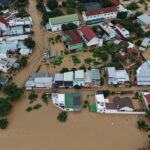
According to the Ministry of Construction, numerous localities have adopted design templates as primary reference materials to guide the design and renovation of housing, as well as the development of storm and flood-resistant housing support programs. Through practical implementation, homes built using these designs have proven to be “safe and resilient against storms and floods.”
Why Did Ho Chi Minh City’s Four Key Departments Receive Urgent Environmental Directives?

The Chairman of the Ho Chi Minh City People’s Committee has recently directed various departments and agencies to undertake a series of critical tasks focused on environmental protection, green transition, and sustainable national development.
The Mekong Delta Aims for Water Resource Autonomy in All Adverse Scenarios by 2050
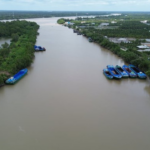
Deputy Prime Minister Tran Hong Ha has signed a decision approving the Mekong River Basin Irrigation Master Plan, spanning from now until 2030 with a vision towards 2050. This plan aims to empower Vietnam’s largest delta region with complete water resource autonomy under all circumstances, effectively managing droughts, saltwater intrusion, and flooding. Ultimately, it seeks to secure sustainable livelihoods for tens of millions of residents.
City to Invest Nearly $430 Million in Flood Control, Climate Resilience, and Infrastructure Upgrades
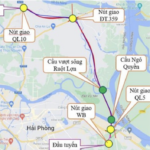
Haiphong City is set to invest nearly VND 10,000 billion in two major initiatives: urban flood control and the construction of Ring Road 3. These projects aim to achieve sustainable infrastructure development and enhance resilience to climate change.
Crafting Climate-Resilient Project Criteria

This criterion will contribute to refining policies related to climate change adaptation and public investment. It will aid ministries, sectors, and localities in clearly identifying the relevance of projects to climate change adaptation goals, providing a basis for selecting well-focused project proposals.