













The job market is becoming increasingly competitive.
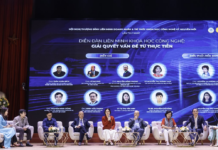
Opening the presentation at TopCV Insight #35 on December 5th, Mr. Trần Trung Hiếu – Founder and CEO of TopCV Vietnam JSC cited the IMF’s global economic growth forecast of approximately 3.2% for 2025, with 2026 remaining modest amid ongoing trade tensions and financial instability. In this context, new momentum is emerging from technology investments, particularly in Artificial Intelligence (AI), though this is gradually creating industry bubbles.
Labor recruitment is not immune to these trends. The reality shows a “freeze” in hiring, with many companies reducing staff or adjusting recruitment strategies compared to the post-Covid-19 period, when hiring was aggressive to boost business. This situation is becoming more common due to geopolitical and economic shifts, as well as the rise of AI, which is reshaping work and recruitment methods.
In Vietnam, data from TopCV’s report mirrors global trends. Job opportunities are increasing in high-value sectors like AI, IT, sales, business, and strategy, while industries with high automation potential see declining recruitment needs.
Notably, over 57.7% of workers take up to 12 months to find new employment, compared to the previous 3–6 months. The pressure stems not from a lack of jobs but from employers demanding higher quality candidates.
In his discussion of 10 notable trends and figures in the 2026 labor market, Mr. Hiếu highlighted that Gen Z continues to lead in voluntary resignation rates (35.7%), citing reasons like incompatibility, self-improvement, and further education. Additionally, 15.5% of laid-off workers choose to enhance their skills rather than seek immediate employment.
High market competition (32.9%) and elevated recruitment standards (25.3%) are the top barriers for job seekers. Employers prioritize investing in digital talent to boost productivity (75.5%), with revenue and profit growth as the second major expectation (47.9%).
Data reveals the top 5 industries with the highest recruitment demands: sales (47.5%), IT/software (8.6%), marketing/communications/advertising (8.2%), customer service (6%), and product research and development (4%).
Another notable trend is that 53% of private sector workers are interested in the public sector, with 73.6% citing stability and security as the most attractive factors.
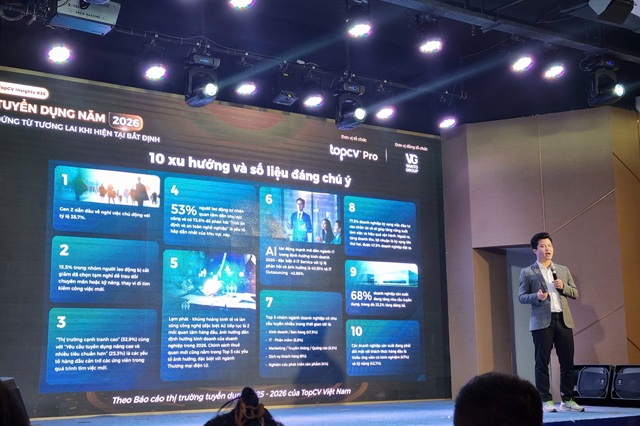
Mr. Trần Trung Hiếu (TopCV) discusses 10 key labor market trends and figures – Photo: Huy Khải
|
For 2026 recruitment trends, TopCV leaders predict most companies will maintain their current scale, while a smaller portion will expand. This indicates selective hiring, prioritizing roles that drive revenue and profit.
Regarding AI optimization, 59.1% of companies focus on training employees in AI skills. However, the current workforce is already naturally and quickly adapting to AI, making training more supportive than mandatory.
Mr. Hiếu notes a significant shortage of skilled talent in technology and AI in Vietnam. The gap between recruitment criteria and candidate capabilities is widening, and labor costs continue to rise.
“Future-oriented recruitment” is a practical approach
To enhance recruitment effectiveness, Mr. David Brown – Asia-Pacific Director, Vanto Group emphasizes a “future-oriented” approach. This involves defining the future outcomes a role will achieve and using this as a guide to design the entire recruitment process, from job postings to interviews, to attract high-quality candidates.
Mr. Brown stresses that a company’s future relies on its people, and recruitment is the first step. Post-hiring, companies must also focus on training, development, and retention.
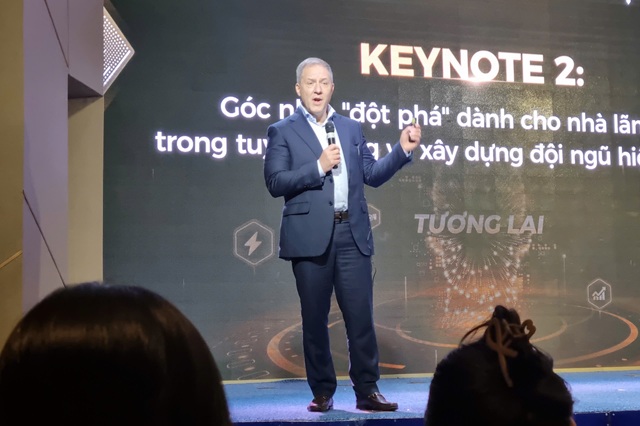
Mr. David Brown (Vanto Group) shares the “future-oriented” recruitment approach – Photo: Huy Khải
|
At the event, Mr. Phạm Duy Hiếu – Chairman of Startup Vietnam Foundation (SVF) shared three core lessons in business and recruitment, focusing on mindset shifts to overcome crises and achieve breakthrough success.
The first lesson emphasizes bidirectional thinking, helping identify opportunities in negative events and maintaining optimism regardless of circumstances. The second lesson underscores the importance of commitment, dedication, and organizational love. The third lesson introduces “x10 thinking,” encouraging ambitious goal-setting to break free from outdated ideas and achieve unprecedented results.
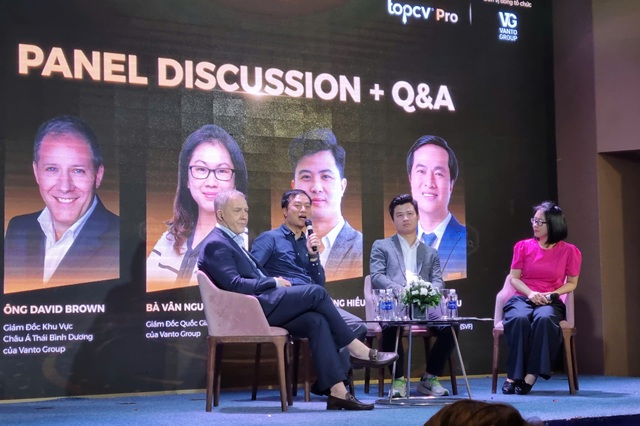
Mr. Phạm Duy Hiếu (with microphone) speaks at the event – Photo: Huy Khải
|
– 10:28 08/12/2025
Expert Warning: Major Shift Ahead—Invest in a New Phone Now if You Can Afford It

Upgrade to a new smartphone now—it’s the smart move. If you’ve already purchased one in the last two years, hold onto it and make the most of your investment.
The Ultimate Guide to the Highest-Paying Industry in Vietnam: Unveiling the Surprising Truth.
The high-tech sector has experienced a slowdown in wage growth due to the challenges of balancing salary budgets in the face of the rapid advancement of AI.
Hiring Spree: Businesses Ramp Up Recruitment in the Final Quarter

To meet the demands of the upcoming peak business season, many enterprises are currently on a hiring spree, actively recruiting a large number of workers, particularly in the service and industrial sectors.
“Ho Chi Minh City: Rising Labour Demand to Stir Up the City’s Year-End Festivities”

The Ho Chi Minh City labor market in Q3 this year was more vibrant compared to the same period last year, with a 2.61% increase in the demand for manpower across various sectors and industries.
Middle-Aged and Experienced: The Challenges of Job Hunting for Older Workers

In a competitive job market, it’s not just young job seekers who are struggling to find employment; middle-aged workers, who are often considered experienced, are also facing challenges.