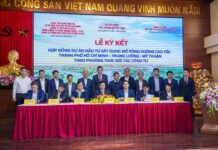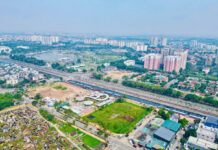















The Ho Chi Minh City People’s Committee has approved the investment policy and selected Vinspeed Railway Investment and Development Joint Stock Company as the investor for the Ben Thanh – Can Gio railway project. This decision, based on the appraisal by the Department of Finance and relevant departments, paves the way for the first high-speed rail line connecting downtown Ho Chi Minh City to the island district of Can Gio.
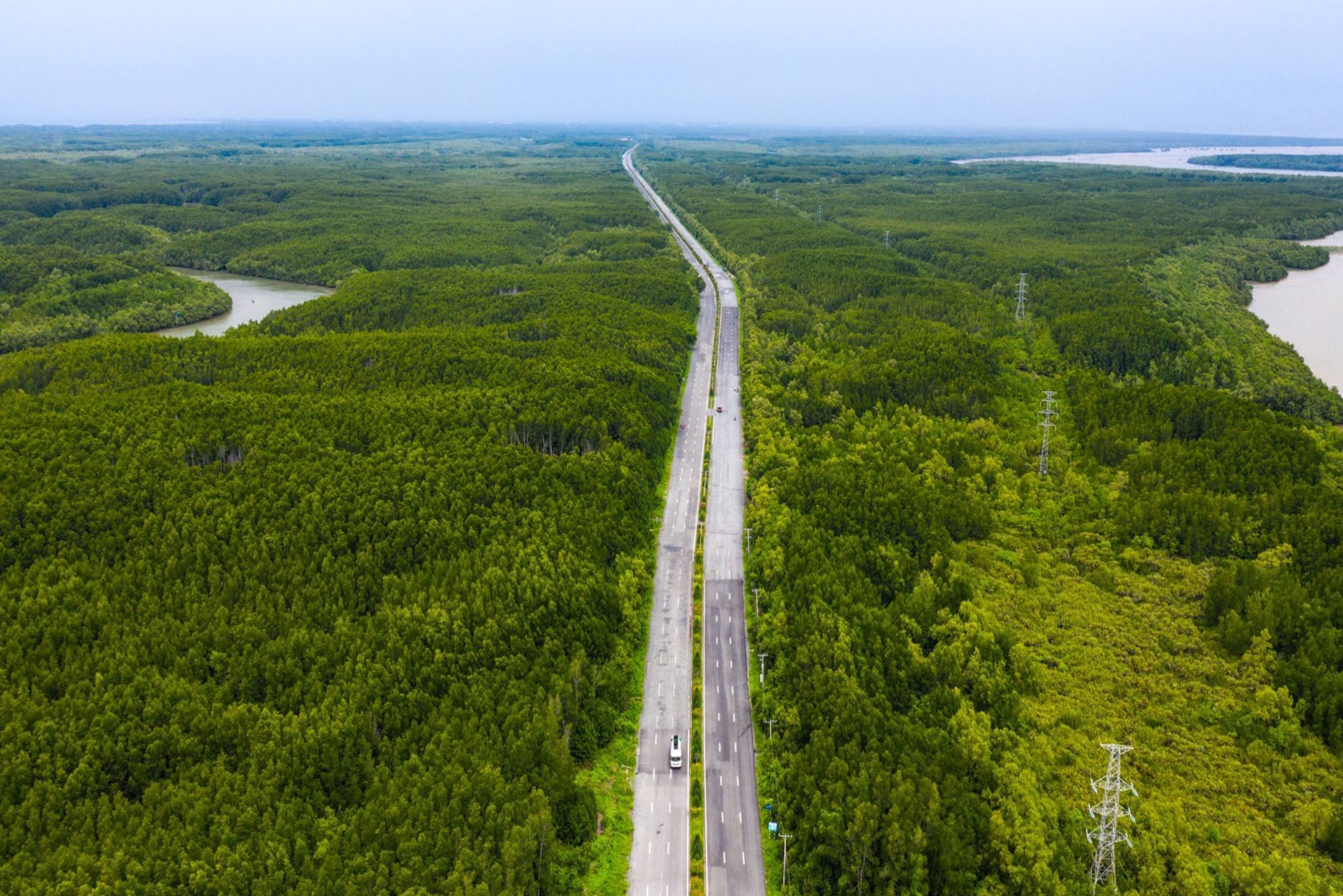
The Ben Thanh – Can Gio high-speed railway project has been approved by the Ho Chi Minh City People’s Committee.
According to the decision, the project aims to realize the transportation and urban development goals outlined in the Ho Chi Minh City Master Plan to 2040, with a vision to 2060, and the Southern Key Economic Region Plan. The double-track railway, with a standard gauge of 1,435 mm and electrification, spans over 54 km and is designed for speeds of up to 350 km/h. Phase 1 includes two stations, Ben Thanh and Can Gio; Phase 2 will add four more stations—Tan Thuan, Tan My, Nha Be, and Binh Khanh—as demand arises. The project includes a depot and an Operation Control Center (OCC) in Can Gio.
The total land requirement for the project is approximately 328 hectares, encompassing residential, agricultural, commercial, transportation, and canal areas, as well as a portion of protected forestland. Affected forest areas will be replanted and restored according to approved plans. During operation, the railway is expected to run for 17 hours daily, with 6 trains operating simultaneously and 1 reserve train, departing every 20 minutes. The total travel time for the entire route is approximately 20 minutes.
The preliminary total investment is over 102.43 trillion VND, excluding land clearance costs of more than 12.7 trillion VND, which will be covered by the city’s budget. Vinspeed will contribute 15.364 trillion VND in equity within 48 months, with the remainder sourced from credit institutions and other legal sources. The project’s operational period is set at 70 years.
The route begins at September 23 Park (Ben Thanh Ward) and ends at a 39-hectare plot near the Can Gio Seaside Tourism Urban Area. It passes through the wards and communes of Ben Thanh, Khanh Hoi, Xom Chieu, Tan Thuan, Tan My, Nha Be, Binh Khanh, An Thoi Dong, and Can Gio.
Key milestones include: commencing compensation and land clearance in Q4/2025; starting construction within 30 months of land handover; and targeting operation by 2028 (excluding the 4 Phase 2 stations). The city allows the investor to advance funds if the budget for land clearance in 2026 is not yet allocated.
The Ho Chi Minh City People’s Committee requires the investor to take full responsibility for the accuracy of the project dossier, implementation progress, and efficiency. If the project fails to meet land-use conversion conditions as per current laws, the city may terminate the project, and the investor will have no right to appeal.
The decision also instructs Vinspeed to coordinate with the Department of Finance to fulfill project guarantee obligations as required. This approval marks a significant step in developing Ho Chi Minh City’s urban rail network, particularly in establishing a new maritime transportation route for the Can Gio area.
Vingroup Invests $28 Million to Establish Subsidiary in Congo, Exploring Real Estate and Electric Vehicle Opportunities

On December 6th, the Board of Directors of Vingroup Corporation approved a resolution to establish a subsidiary company in the Democratic Republic of the Congo through capital contribution.
Accelerating the Metro Link Between Tan Son Nhat and Long Thanh
Metro Line 2 (Bến Thành – Tham Lương) is slated to break ground before January 19, 2026. Concurrently, the segments connecting Bến Thành – Thủ Thiêm and Thủ Thiêm – Long Thành are in the investment preparation phase. All three lines are projected to be operational before 2030, establishing a high-capacity, modern transit axis linking Tan Son Nhat and Long Thanh International Airports.
Why Ho Chi Minh City’s Land Database Remains Incomplete
As of now, Ho Chi Minh City has successfully established a comprehensive land database for 3.14 million land plots, ensuring accuracy, completeness, cleanliness, and real-time updates. Among these, 1.76 million plots have been verified with confirmed ownership. However, 689,629 plots remain incomplete due to unresolved discrepancies between land user information and the national population database.
Unlocking Progress: Ho Chi Minh City Resolves Hurdles, Issues Land Titles for Multiple Projects

Introducing a series of prestigious projects now on track for red book issuance, following thorough review by Task Force 1645: the office tower and apartment complex at 39-41-43 Vo Van Kiet Street, Sai Gon Ward; the low-rise residential area in Binh Trung Moi Ward; DEFINE Residence in Cat Lai Ward; and the Sonadezi Huu Phuoc residential zone in Ngai Giao Commune.
Unveiling the Unregulated: A Spotlight on Informal Settlements and Illegal Housing in Ho Chi Minh City
Hundreds of informal settlements, built on agricultural land and existing for years, are predominantly located in the northern areas of Ho Chi Minh City, where a large number of migrant workers reside and work. Residents living in these unnumbered houses are increasingly anxious, especially as similar areas have faced forced evictions.