












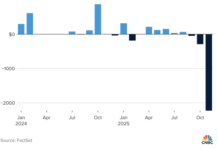
Essential Goods Prices Surge
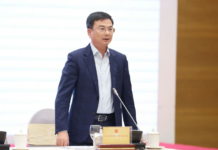
On the morning of October 20, continuing the opening session of the 10th National Assembly, Chairman of the Economic and Financial Committee Phan Văn Mãi presented a review assessing the implementation results of the National Assembly’s resolutions on socio-economic development for 2025 and the 5-year period 2021-2025, along with the projected socio-economic development plan for 2026.
Regarding implementation, according to Phan Văn Mãi, Vietnam has made remarkable strides, achieving comprehensive and impressive results across most sectors. This underscores the nation’s resilience, adaptability, and effective macroeconomic policy management.

Complex gold market dynamics limit medium and long-term capital mobilization.
However, Vietnam’s socio-economic landscape also faces challenges. The growth target is under pressure as key drivers such as exports, consumption, and investment have yet to generate sufficient momentum. Growth quality remains limited, with the economy still heavily reliant on processing and imported raw materials and technology.
The review committee also notes that macroeconomic stability is fraught with risks. While inflation is under control, prices of essential goods have risen sharply, directly impacting the livelihoods of citizens, particularly low-income groups. Exchange rate management faces significant challenges, the corporate bond market has not recovered, and the complex dynamics of the gold market limit medium and long-term capital mobilization.
“The real estate market requires accurate assessment. Credit to this sector increased by nearly 19.7% by the end of August 2025, while capital for production and business remains constrained. Among 21 economic sectors, construction has the highest non-performing loan ratio at 11.33%,” stated Phan Văn Mãi.
Caution in Fiscal and Monetary Policies
Regarding the 2026 socio-economic development plan, the review committee largely agrees with the government’s proposed overarching directions, general objectives, and targets. The committee emphasizes the need to steadfastly maintain macroeconomic stability, uphold major balances, and exercise flexibility, proactiveness, and caution in fiscal and monetary policies, while effectively managing the gold market.
Additionally, efforts should focus on strengthening the economy’s intrinsic capacity and resilience, increasing domestic localization and added value. Key priorities include developing foundational, spearheading, and emerging industries, as well as advancing sectors such as technology, clean energy, green energy, nuclear, semiconductors, space, and quantum technologies.
Phan Văn Mãi also highlighted the importance of substantively developing dynamic regions, establishing and operationalizing the International Financial Center in Ho Chi Minh City and Da Nang, and launching new-generation free trade zones in select localities.
The review committee further recommends decisively addressing institutional and legal bottlenecks, particularly in investment and business, to unleash production potential and mobilize development resources. Urgent action is needed to resolve overlaps in administrative operations, especially at the grassroots level, and to continue refining and enhancing the effectiveness of the two-tier local government model.
Prime Minister and Deputy Prime Ministers Conduct Over 400 Field Visits During 2021-2026 Term
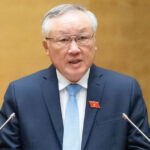
Between 2021 and 2025, the Prime Minister and Deputy Prime Ministers conducted over 400 working trips to local areas and grassroots levels, actively addressing and resolving challenges and obstacles in a timely manner.
Vietnam Joins the Top 20 Global Leaders in a Historic Milestone
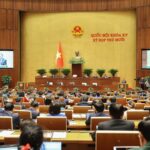
Prime Minister shared this information during the opening session of the 10th meeting, the final session of the 15th term, this morning (October 20th).
National Assembly’s Economic Committee Applauds Government’s Bold Policies and Visionary Leadership
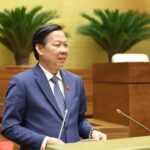
The National Assembly’s Committee on Economics and Finance (KTTC) commends the Government’s bold, decisive policies, its proactive mindset, and agile, timely leadership. These efforts have yielded significant positive outcomes, with many targets surpassing expectations. This success lays a crucial foundation, bolstering confidence, stabilizing the macroeconomy, and creating favorable conditions for rapid, sustainable development in the upcoming period.
Prime Minister: Vietnam’s Per Capita GDP Projected to Reach $5,400–$5,500 by 2026
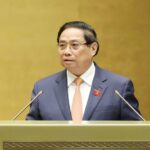
In presenting the projected socio-economic development plan for 2026, Prime Minister Phạm Minh Chính outlined ambitious targets: a GDP growth rate of 10% or higher, per capita GDP reaching $5,400–$5,500, and an average CPI increase of around 4.5%. These goals are supported by ten key task groups and primary solutions.
Government Sets Ambitious 10%+ GDP Growth Target for 2026
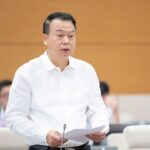
On the morning of October 15th, the 50th Session of the National Assembly Standing Committee continued with discussions on the Government’s reports. These reports detailed the outcomes of the 2025 socio-economic development plan, the proposed 2026 socio-economic development plan, and the implementation results of the National Assembly’s resolutions on the 2021-2025 five-year plan for socio-economic development and economic restructuring. Vice Chairman of the National Assembly Vũ Hồng Thanh chaired the discussion session.